


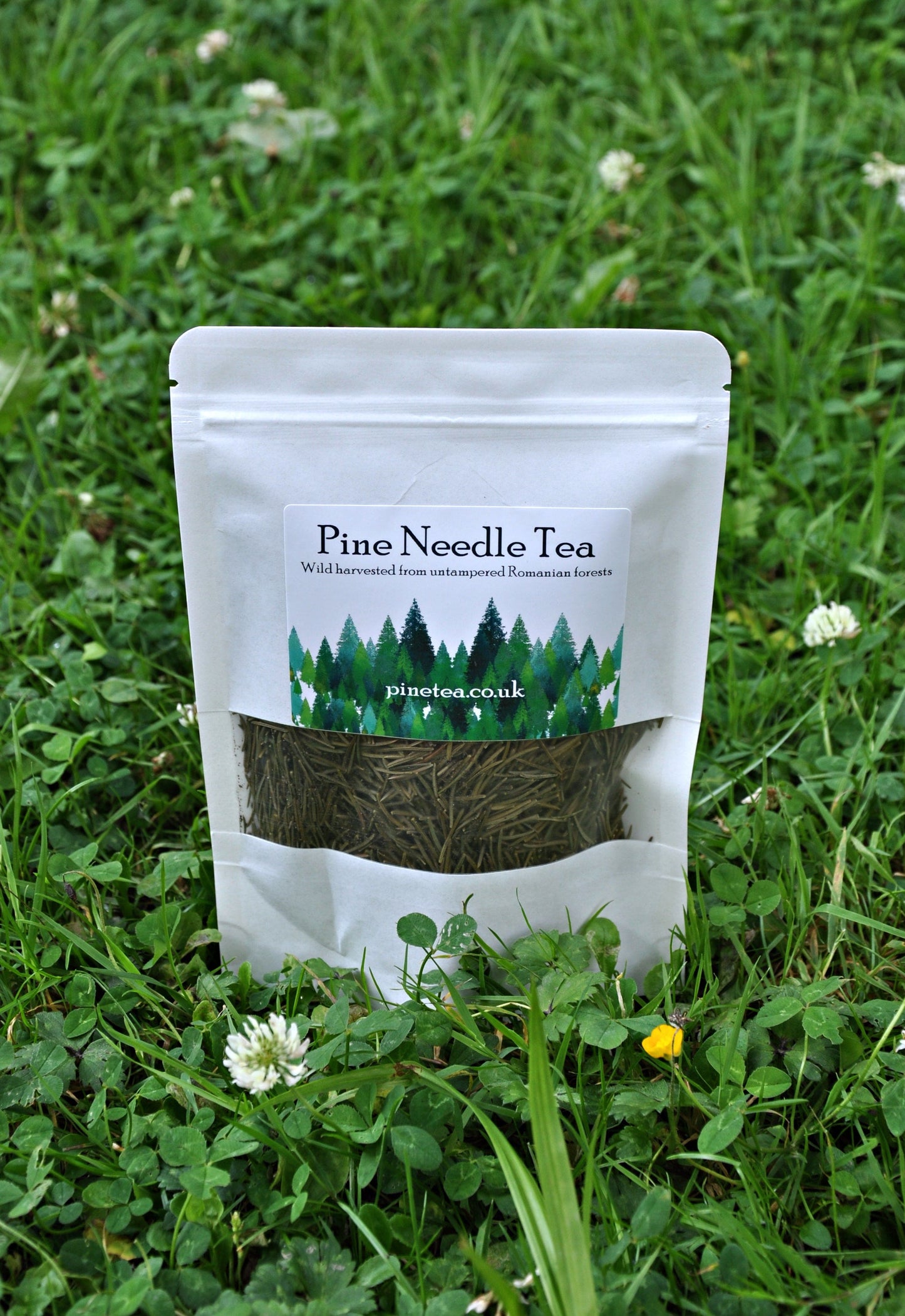
Description
Pine Needle Tea
Our wild-harvested white pine needle tea comes from one of the most untouched ecosystems in Europe, the old-growth forests that straddle the Carpathian Mountains in Eastern Europe..
Pine needle tea from White Pine has been considered an important medicinal tool for indigenous cultures for centuries. While formal research is somewhat limited on the subject, the anecdotal evidence of its benefits is undeniable. Only the fresh young needles are selected for our products, then carefully dried to preserve maximum bioavailability.
Benefits
Why people drink pine needle tea
White pine needle tea has been enjoyed traditionally for centuries and is a natural source of vitamin C and antioxidants. People drink it as a warming herbal tea with a fresh, citrusy taste. We make no medical claims for this product.
Do any Pine Needles make pine tea?
Most people know of pine trees. But, not all Pine Needles can be drunk as tea. We use needles from White Pine, which is most definitely safe and full of vitamins, minerals and antioxidants.
Other species of pine can sometimes contain toxins that can cause side effects that are unwanted so we always suggest getting pine tea from a source which you know is from white pine only.
Is all Pine Needle Tea Safe to drink?
No, not all pine needle tea is safe to drink. Certain species of pine are known to contain harmful substances and should be avoided. For instance, the needles of the Ponderosa Pine, Norfolk Island Pine, and Yew tree contain compounds that are toxic to humans when ingested.
It is essential to accurately identify the species of pine from which you are gathering needles. Commonly recommended varieties for pine needle tea include Eastern White Pine and Scots Pine, which are generally considered safe for consumption when properly prepared.
Additionally, be mindful of the environment from which you are harvesting pine needles. Areas exposed to pollution, pesticides, or herbicides may contaminate the needles.
Instructions
How to Make Pine Needle Tea
To optimise the preparation of pine needle tea, you may consider the following method:
-
Measure approximately three cups of water and pour it into a stainless steel or glass saucepan.
-
Place the saucepan on the stove and heat the water until it reaches a gentle simmer.
-
Once the water is simmering, turn off the heat or remove the saucepan from the stove. This step is crucial for preserving the nutritional content of the tea.
-
Add around half a cup of freshly harvested pine needles to the water in the saucepan.
-
Allow the pine needles to steep in the hot water for approximately 5 to 10 minutes. Avoid boiling the mixture, as this can degrade vitamin C and release terpenes, which would render the tea bitter.
-
If you desire a more robust flavour, you may add additional pine needles to the infusion, rather than increasing the heat.
-
Once the steeping time has elapsed, strain the tea into your serving vessel, discarding the pine needles.
Never boil your pine needle tea. Boiling tends to break down vitamin C and release terpenes that make the tea more bitter. If you want a stronger tea, simply add more needles rather than increasing the heat.
Are there Side-Effects of Pine Needle Tea
Pine Needle tea may pose a danger for those taking warfarin, a medication used to prevent blood clots. Very rarely, individuals have reported allergic symptoms to pine such as gastrointestinal issues, but in the vast majority of cases the tea is safe and healthy to drink regularly.
Dosage:
3 cups per day
Children: 1/3 cup, up to 3 times per day

why choose nano minerals
-

Additive
Free -

Completely
Tasteless -

Highly
Bioavailable -

Vegan & Vegetarian Friendly
-

Packed in Biophotonic Glass
-

Gentle on the Stomach



Benefits of Pine Tea
It is especially useful for:
-

Sleep Problems
-
Stress Relief
-
Energy Production
-
Cardiovascular health
-
Metabolic health
-
Pain Relief
-
Athletic Performance
-
ADHD

Discover it for Yourself
-

HASSLE-FREE RETURNS
Easy returns for a stress-free shopping experience.
-

TRUSTED QUALITY
Premium products crafted with care and precision.
-

FREE UK SHIPPING
Fast, free delivery on UK orders over £65.


